









Nuevo artículo en la revista European Journal of Wildlife Research
Molecular detection of herpesvirus in a skin lesion of a humpback whale (Megaptera novaeangliae) from the Western Mediterranean Sea.
 Resumen: Herpesvirus has the potential to infect a wide variety of animal species. In cetaceans, Alpha- and/or Gammaherpesvirinae have been identified in eight families of odontocetes, and one family of mysticetes. In May 2022, an adult humpback whale (Megaptera novaeangliae) was found stranded in Valencia, Spain. The whale was emaciated, in poor body condition, with multiple lacerations on the dorsal fin and a high number of epibionts of the Cyamidae family, known as whale lice. The individual had been previously released from a ghost net entanglement 5 days before becoming stranded. In a closer examination, various skin lesions were observed, including chronic, proliferative, and erosive dermatitis and a large ulcer extending to the deep dermis. As part of the infectious disease surveillance programme, molecular testing was performed on skin samples for herpesvirus, cetacean morbillivirus, and poxvirus. A positive result for herpesvirus was obtained from one of the skin lesions. The sequence was found to belong to the Alphaherpesvirinae subfamily, and it was closely related to alphaherpesvirus sequences from a fin whale (Balaenoptera physalus) and a humpback whale. Cetacean morbillivirus and poxvirus testing was negative. To the authors’ knowledge, this is the first report of herpesvirus in a humpback whale from the Mediterranean Sea. Reports on herpesvirus detection or infection in humpback whales (only species within the genus Megaptera) are scarce. In consequence, future virological assessments of humpback whales should include testing for herpesvirus.
Vargas-Castro I, Crespo-Picazo JL, Jimenez Martínez MÁ, Muñoz-Baquero M, Marco-Cabedo V, Garcia-Parraga V y Sanchez-Vizcaino JM
 Acceso abierto al artículo
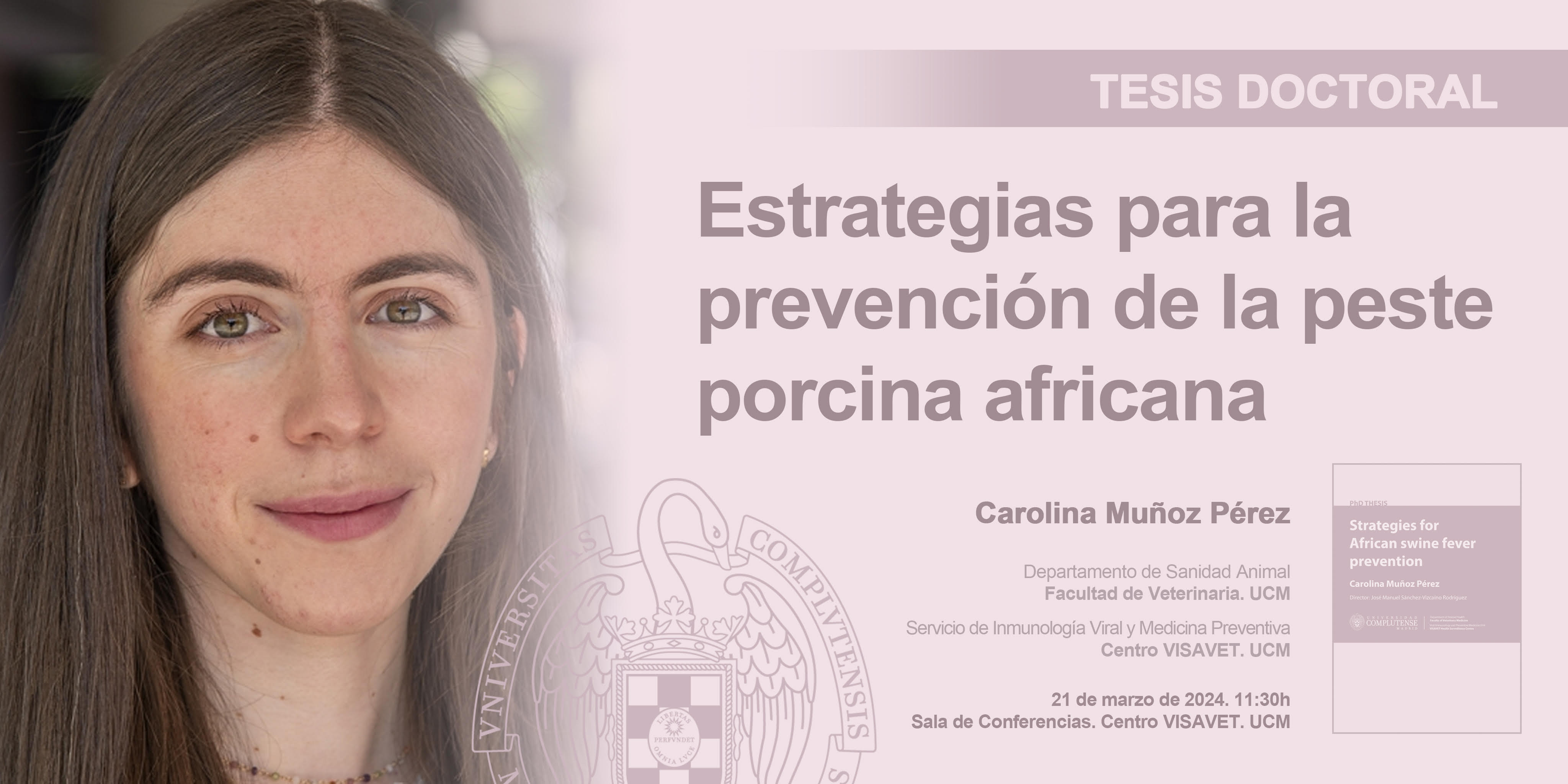
Defensa de tesis de Carolina Muñoz
Carolina Muñoz defendió su Tesis Doctoral titulada "Estrategias para la prevención de la peste porcina africana " este jueves 21 de marzo de 2024, obteniendo la máxima calificación de sobresaliente cum laude.
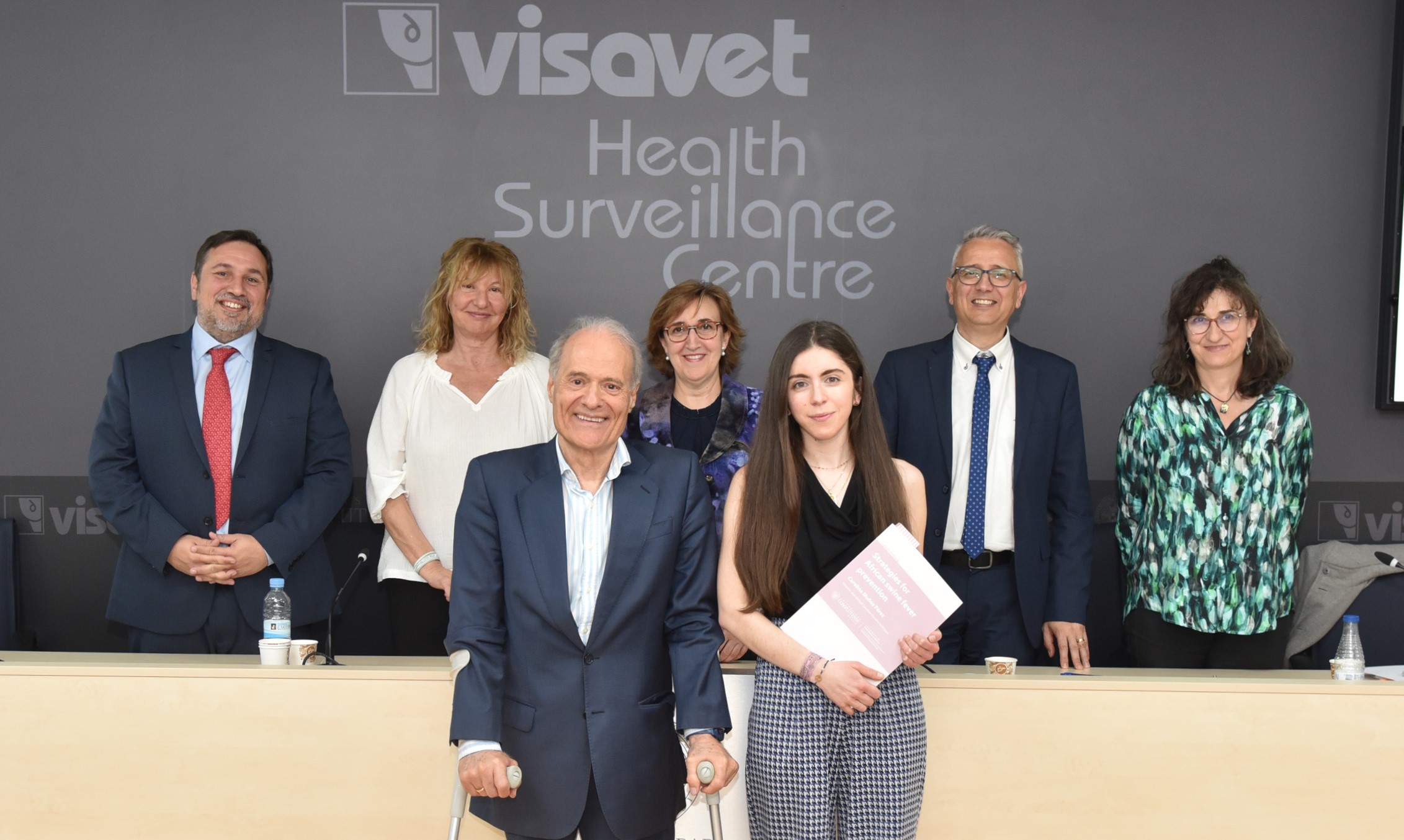
¡Felicidades Carolina! El equipo SUAT te da la más sincera enhorabuena
¿Conseguiremos una vacuna para la enfermedad más letal del sector porcino?
Entrevista a José Manuel Sánchez-Vizcaíno para AgriNews TV.
Tesis Doctoral Carolina Muñoz Pérez
El próximo jueves 21 de marzo de 2024, Carolina Muñoz defenderá su Tesis Doctoral "Estrategias para la prevención de la peste porcina africana" dirigida por el profesor José Manuel Sánchez-Vizcaíno. El acto tendrá lugar a las 11.30 horas en la Sala de Conferencias del Centro de Vigilancia Sanitaria Veterinaria (VISAVET) de la Universidad Complutense de Madrid.
Resumen:
La peste porcina africana (PPA) es una enfermedad infecciosa que afecta tanto a cerdos domésticos como salvajes, y que se encuentra dentro de la lista de enfermedades de declaración obligatoria para la Organización Mundial de Sanidad Animal (WOAH). En los últimos años la enfermedad se ha expandido por todo el mundo convirtiéndose en una pandemia. Una pandemia que supone en la actualidad la mayor amenaza para la producción porcina mundial. En vista de esta situación, la presente tesis doctoral titulada: “Estrategias para la prevención de la peste porcina africana”, persigue el objetivo de obtener información epidemiológica sobre los factores de riesgo más importantes para la introducción de la PPA en una zona libre, concretamente el movimiento natural de las poblaciones de jabalíes y el comercio internacional de cerdos o de productos cárnicos derivados.
Aplicación de machine learning con datos a gran escala para una vacunación efectiva contra la peste porcina clásica en jabalíes en Japón
Publicamos un nuevo artículo de investigación en la revista Scientific Reports.
 Resumen:
La peste porcina clásica ha estado propagándose por todo el país desde su reaparición en Japón en 2018. La Prefectura de Gifu ha estado trabajando diligentemente para controlar la enfermedad mediante la difusión de vacunas orales dirigidas a los jabalíes. Aunque se rociaron vacunas en 14,000 ubicaciones entre 2019 y 2020, solo se confirmó la ingesta de vacunas por parte de los jabalíes en el 30% de las ubicaciones. En este estudio, pronosticamos la tasa de ingestión de la vacuna en cada punto mediante un modelo de Bosque Aleatorio basado en datos de difusión de vacunas y creamos superficies de predicción para la probabilidad de ingestión de la vacuna por los jabalíes utilizando técnicas de interpolación espacial. Como resultado, la distancia desde el punto de vacunación hasta la fuente de agua fue la variable más importante, seguida por la elevación, la temporada, la densidad de carreteras y la pendiente. El área bajo la curva, la precisión del modelo, la sensibilidad y la especificidad para la evaluación del modelo fueron 0.760, 0.678, 0.661 y 0.685, respectivamente. Se predijo que las áreas con una alta probabilidad de vacunación de jabalíes se encontraban en la parte norte, este y oeste de Gifu. Los resultados de la Validación Cruzada de Exclusión de Uno mostraron que el enfoque de Kriging fue más preciso que el método de Ponderación de Distancia Inversa. Destacamos que estrategias efectivas de vacunación basadas en datos epidemiológicos son esenciales para el control de enfermedades y que nuestra herramienta propuesta también es aplicable a otras enfermedades en la vida silvestre.
Ito S, Aguilar-Vega C, Bosch J, Isoda N y Sanchez-Vizcaino JM.
Nuevo artículo publicado en la revista Microbiology spectrum
 Resumen: Brucella spp. are zoonotic pathogens that can affect both terrestrial and marine mammals. Brucella ceti has been identified in various cetacean species, but only one sequence type (ST27) has been reported in humans. However, it is important to conduct surveillance studies to better understand the impact of marine Brucella species on marine mammals, a typically understudied host group. Here, we describe a systemic infection by two related strains of Brucella pinnipedialis (ST25) in a couple of live-stranded bottlenose dolphins, with more severe lesions in the younger animal. Furthermore, B. pinnipedialis was first detected in milk from a female cetacean that stranded with its offspring. Our study reveals novel insights into the epidemiology and pathological consequences of B. pinnipedialis infections in cetaceans, emphasizing the crucial importance of ongoing surveillance and accurate diagnosis to understand the impact of this pathogen on marine mammal populations.
Vargas-Castro I, Crespo-Picazo JL, Fayos M, Jiménez-Martínez MdlÁ, Torre-Fuentes L, Álvarez J, Moura AE, Hernández M, Buendía A, Barroso-Arévalo S, García-Seco T, Pérez-Sancho M, De Miguel MJ, Andrés-Barranco S, Marco-Cabedo V, Peñin-Villahoz G, Muñoz PM, Domínguez L, García-Párraga D y Sánchez-Vizcaíno JM.